

There’s not much that unites Belgians, but if there’s one thing, it’s football. The European kind, aka soccer. But I’ll keep calling it football anyway.
We used to have a Golden Generation. A squad of Red Devils (as the Belgian national team is called) with central positions in many of the world’s top clubs: Real Madrid, FC Barcelona, Manchester United, Bayern Munich, .. you name it. However, despite all this talent we never managed to win a FIFA World Cup or even the UEFA European Championship.
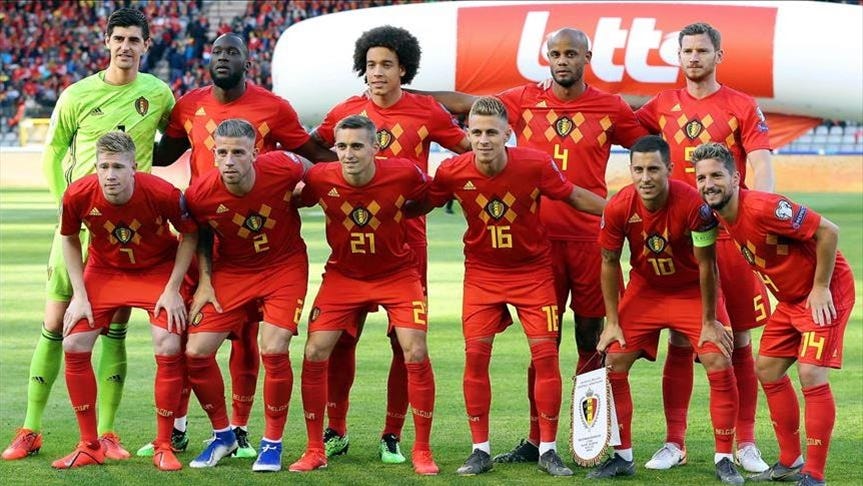
Some will argue it was too much talent combined, and it kind of makes sense if you keep Adam Grant’s TED Talk in mind. The majority of people however are just couch coaches: criticizing players and leadership from their own homes. Or from the pub of course.
There’s one player in particular I’d like to focus on: Romelu Lukaku. He’s Belgium’s all-time top goal scorer, with about 90 goals for the national team. Apart from that, he made a career in the Premier League, the world-renowned English competition, playing for Chelsea, Manchester United and the likes.

Lukaku is a tank. 1.91m (about 6 foot 3) and weighing 93 kg (205 lbs). A very strong and big player. He’s what they call a target man in football. His job, get as close as possible to the opponent’s goal, wait for the ball, and put it in the net. Easy does it.
Performance football
Looking at Lukaku’s numbers, it’s a strategy that pays off. He scores more than any other Belgian player. Yet at the same time he gets quite some criticism (the couch coaches, remember): he’s just standing there waiting. He gets easily tired if he has a lot of running to do. It’s almost as if it’s not fair: the other players do the heavy lifting and Lukaku claims the goal.
Still, he gets the job done. And if he wasn’t there, in that position, all efforts might have been for nothing.
Lukaku, for me, is performance marketing in a funnel. You play the game as well as you can, and when you reach the goal, you score.
The funny thing about marketers is that they seem to think the complete opposite of football fans. While fans see the full play and even question whether it was needed to have a finisher between the action and the goal (especially when no goal is scored, even Lukaku misses most attempts) a marketer looks at the numbers. If the majority of goals are scored by a single player, we simply need more Lukakus!
No build-up, no results
Can you imagine all players on the field having the same task: camp in front of the goal and try to score? Not only would this result in chaos, it simply wouldn’t work. Because you need to get the ball there first. You need to do the heavy lifting. You need to build your play.
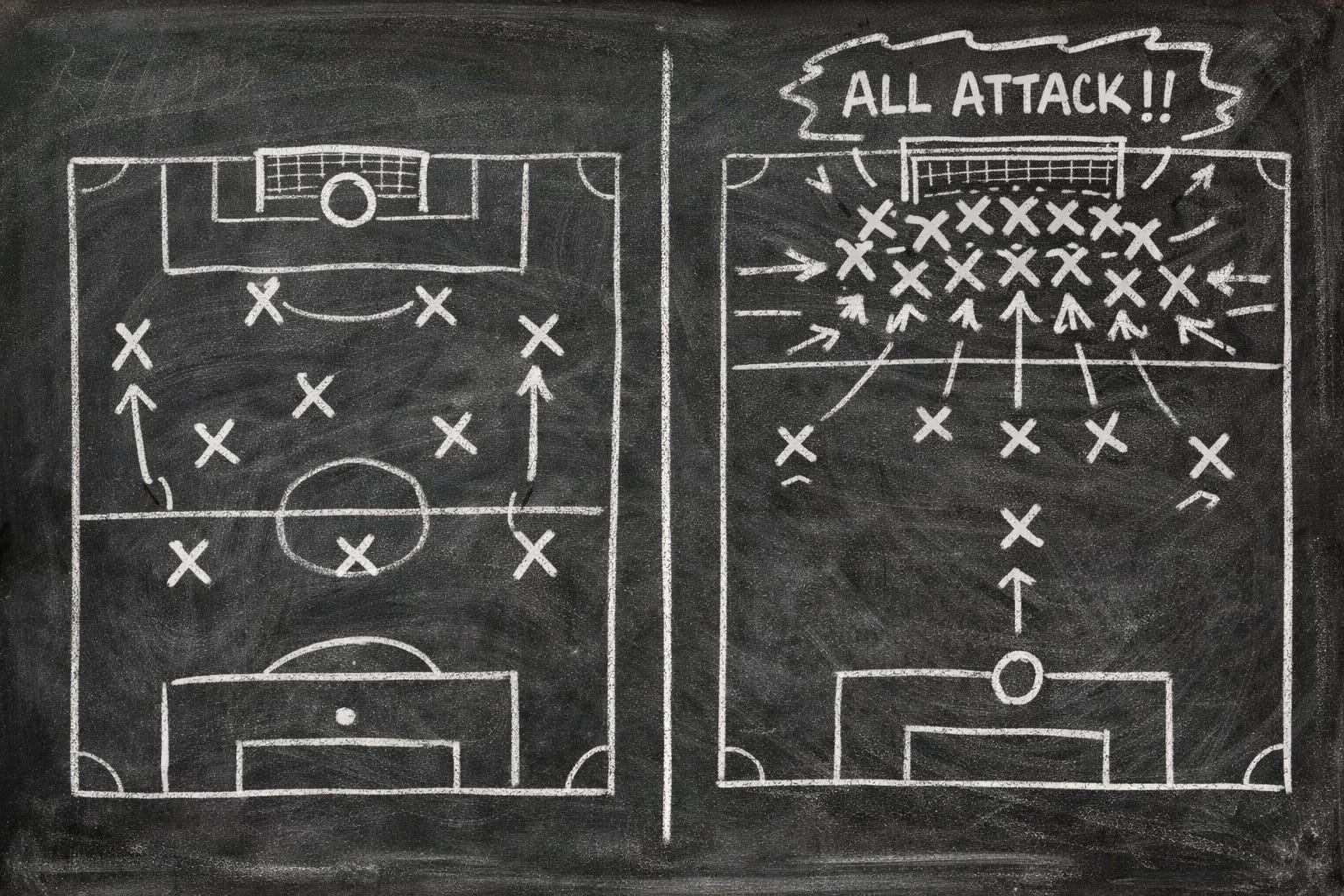
That’s no different from marketing.
One difference, however, is this: there are no limitations on the number of players you can put on the field. It can be 11. Or just 1. Or 11,000. Another difference is: your marketing game can’t be televised in 90 minutes. So it’s fair to say it’s less intuitive.
Performance marketing, in the way we know it today, is a relatively new phenomenon. It’s something that emerged in the slipstream of the internet and digital platforms. Marketing, however, is a very old trade that has evolved over centuries. It’s a trade that created results since the very first ad, probably thousands of years ago1. It’s a trade that has made brands famous. But as the famous Wanamaker quote goes: not all efforts are (directly) attributable.
"Half the money I spend on advertising is wasted; the trouble is I don't know which half"
- John Wanamaker
Performance marketing gives the false promise that you can identify which half is wasted. Even better, there are models where you only pay for results (for clicks at least, they might or might not result in a sale). Of course this is only a partial truth and there’s a whole industry that has evolved around the technology alone (for more on that read my other article).
Although we were able to build effective campaigns without performance marketing, the idea of allocating more budget to identifiable results is something that resonates with a lot of marketers. And especially, with CFOs.
The holistic view
Lukaku is a valuable player, whatever critics may say. And when used right, performance marketing techniques can absolutely be valuable in a marketing mix. The trouble is when we isolate them from the rest of the game. The most important thing, in football, and in marketing, is the build-up. How do you get the ball in front of the goal? How do you get a consumer to consider you?

In the end, all marketing is a funnel. It starts with getting to know the product or service (attention or awareness): it exists. And it ends with a purchase (action). Marketers should aim to get as many prospects into the funnel as possible, and push as many through as they can. Performance marketing camps at the very bottom to give that final push.
When I was at university, over two decades ago, we learned something in advertising class that not a lot of people seem to mention anymore. The difference between high- and low- involvement products. I think it’s critical in deciding your ideal marketing mix. A low-involvement product is just a shallow buy. A new snack in the supermarket that attracts you with its bright colors. Not expensive and not much brainpower needed to decide whether to buy it or not. Not so with high-involvement buys, like a new car.
On top of that there are low-involvement products that still involve a high perceived effort to buy. This is especially true for commodities: you don’t switch your bank, telco and energy supplier every month. It’s a hassle, or at least that’s what we believe.
The interesting thing is that the permeability of the aforementioned funnel shifts depending on whether the product is high involvement or has a high perceived effort to buy. In low-involvement categories, especially with a low perceived effort to buy, funnels become very liquid. Grabbing the right attention can result in sales. Directly.
This is what Amazon has done extremely well: they’ve created the most performative machine for low-involvement sales in the world. I just bought an infrared thermometer but I have no clue about the brand. It’s not relevant. It fits my needs, that’s enough. We fire our needs into the Amazon platform and are presented with the right products for the right price, delivered to our doorstep the next day. The genius of their platform is that there’s no need for performance marketing, it’s a performance platform. Although even there, there’s an opportunity to make money, as Amazon offers sellers on their platform a way to promote their products. Double win.
For low-involvement products, and products with low perceived effort to buy or switch, performance marketing is a technique that makes perfect sense. Not so for high-involvement products or products that require effort to buy. The funnel becomes rock-solid. Getting people in becomes harder, getting people through becomes a real challenge. The key here is to get them in the middle, in consideration mode. Here they can get to know your offering, compare it with alternatives and ideally start considering you.
The task at hand is to make sure you will be compared. Because that’s what happens anyway. Even if you’re a lifelong BMW driver and up for a new car, you will still at least check what your money can buy from one of the competitors. As soon as the decision is made, the actual purchase will happen following whatever the circumstances: the end of your leasing, a promotion or some kind of planned date.
Nobody will buy a car through a Google ad.
And why you would need that ad when someone Googles you directly remains a mystery to me.
In high-involvement categories it’s all about the brand. For the record, I’m not saying that low-involvement categories don’t profit from a great brand as well, just ask Coca-Cola if you don’t believe me. A great brand helps stand out in the crowd. It helps get “into the comparison pool”. And it helps convince people that it’s worth spending the money. The best place for a brand to be, is the number one in what they call: spontaneous recall. If they ask you to name a car make, what brand do you shout first?
The all-rounder
Lukaku played 124 international matches with the Belgian national team. In these 124 games he scored 89 goals. That’s an impressive 0.72 goals per game.
Cristiano Ronaldo played 226 international matches and scored 115 times, or 0.59 goals per game.

From a performance management lens, Lukaku is the better player.
Except he’s not. And this is not just an opinion, just look at their salaries. Ronaldo, almost 10 years older than Lukaku reportedly makes at least $233 million per year while Lukaku earns a mere $9 million. That’s almost 26x more, and this is salary alone, based on widely cited estimates.
Ronaldo is a more versatile player. He scores, but he does so much more. And he attracts way more eyeballs doing so (hence his higher pay). This is what a great brand does. And this is what creativity does to a brand. Yes it’s expensive, but people will know you, like you and buy you. Ronaldo is brand activation: he scores on the brand and on the goal.
What marketers can learn from football
Let’s try to end this with some conclusions.
Know what you have on the field.
Not every marketing tool plays the same position. Performance marketing is a finisher, not a playmaker. Treat it accordingly.Don’t confuse visibility with impact.
The last touch before conversion is easy to measure, but it’s rarely the moment that created demand.Build the play before you try to score.
Brand, consideration, and trust are what move prospects down the field. Without them, performance channels have nothing to convert.Match your tactics to your category.
Low-involvement products can convert fast. High-involvement ones need nurturing. Strategy should reflect that reality.Optimization isn’t strategy.
Improving conversion rates is valuable, but optimizing the last step of a weak funnel won’t fix the funnel itself.Balance teams win.
The strongest marketing systems combine brand building and performance. One creates demand; the other captures it.Measure what matters, not just what’s measurable.
If you only invest where attribution is easy, you’ll systematically underinvest in what actually drives growth.
Or to end with a quote
“Not everything that counts can be counted, and not everything that can be counted counts.”
- William Bruce Cameron
I’m Steven. I write about advertising and technology. I head AdSomeNoise, a new breed of full-service advertising agency with a digital core, based in Europe and operating globally. I’d love to get in touch.
Thanks. I now know so much more about soccer…
And I’ve gained a very good metaphor I can probably never use convincingly.