

I’m a big fan of Michael Lewis.
You might know him from his books turned into movies: Moneyball, The Blind Side .. and especially The Big Short. That last one, together with Margin Call, is probably the movie that gives the best insight into the financial crisis of 2008.
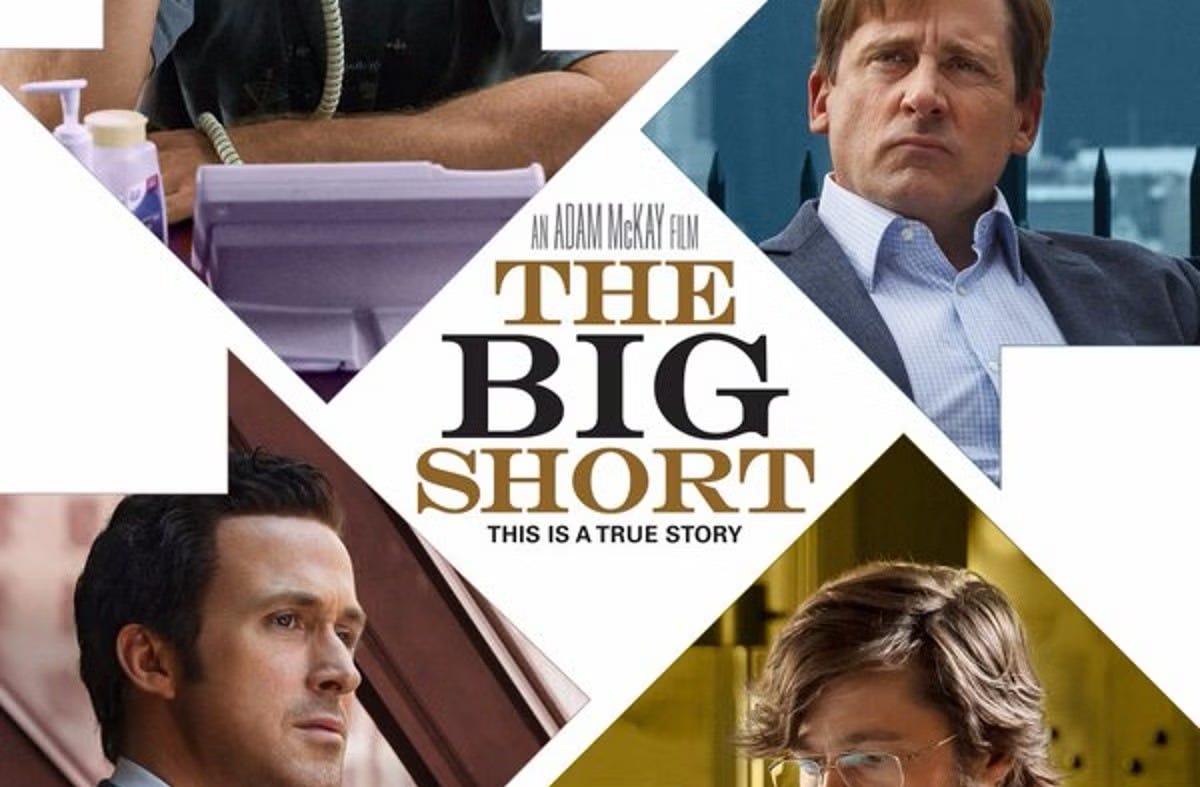
Lewis writes about numbers. Sometimes directly about finance, sometimes more from the sidelines. There are two personal wishes I have regarding Michael Lewis:
To have him speak at an annual marketing conference I organize (but we don’t have the budget, damn).
To have him write a book about advertising media.
The reason for the second point is simple: there are many analogies between finance and media. The good, the bad and yes, also the ugly.
The media business.
Media can mean many things, from communication channels to the entertainment industry. When I talk about media in this piece, I mean advertising space. If you spend money to have your ad run on TV, on a billboard, on a website or on Instagram, you pay the owner of that space. Typically we call this owner the publisher.
Buying this media is something advertisers can do themselves, either directly with publishers or sales houses, or via an intermediate, called a media agency.
Advertising space is a massive industry, globally estimated at $1.1 - 1.14 trillion annually. Huge, but still tiny compared with the financial industry, which is roughly 200 times bigger. Still, it’s a lot of money. And as we’ve learned from finance (and from Lewis): where there’s money, there’s abuse.
In days gone by ..
Media used to be a fairly simple industry. If you attracted eyeballs with your content, you had ad space to sell. Posters, radio commercials, TV ads, magazines, .. you name it. I recently came across on a picture of a book from the 1950s with a cigarette ad printed right in the middle.

Buying media space and advising advertisers where to spend their money was already a speciality, one that advertising agencies mastered. In the old days this was the entire business model: agencies bought ad space for their clients, and the commission they earned from media buying financed everything else: creative teams, account teams, fancy buildings, .. you name it.
Successful campaigns resulted in more media spend → more commission → profit.
But however complex or opaque the media-buying process might have been, the outcome was always very clear: a controllable ad. A poster or a tv commercial could be checked by anyone. And everyone could judge whether it felt right. Maybe that flower ad in Playboy wasn’t speaking to the right audience?
From stock exchange to ad exchange.
Things changed in the 1990s and 2000s when the internet became a medium that couldn’t be ignored. Initially, websites attracting eyeballs and realized they could sell ads. They operated much like traditional media. Bigger sites worked with sales houses, and technology was invented to place digital ads more easily. But fundamentally, you still bought space on a website for a number of impressions.
Then came ad exchange networks. Instead of buying inventory on a single large website, technology made it possible to buy space across many websites at once (whether or not they were thematically related). These networks worked much like an index fund: an overarching instrument that replaced buying many individual assets.
The next iteration was even more profound. Technology was no longer just used to place ads on websites; it became possible, and eventually preferable, to target the viewer instead of the website.
If you wanted to promote a gardening product, you no longer needed to find gardening websites to run you ad. You could target gardeners directly, wherever they happened to be browsing (within the ad exchange network, of course).
To do so, a lot of data was required. Data that wasn’t always acquired in the most ethical way. But the tools abstracted all of that away. For some reason, they “just knew”.
One of the leading ad tech players of that era was DoubleClick. A Funny name for a company operating on the internet, where everything supposedly happens with a single click. DoubleClick had tools, an ad exchange network and vast amounts of data. Which is why Google paid $3.1 billion in cash for the company in 2007. That acquisition marked the beginning of Google’s advertising hegemony.

Real time bidding.
By the end of the 2000s, a new technology emerged: real-time bidding. Inspired by stock trading platforms, companies like AppNexus built tools to automate media buying across multiple ad exchanges.
You uploaded your creatives, configure your targeting and set your bids. This worked just like a limit order on a stock exchange: you told the netwok your maximum price (expressed as a CPM, cost per thousand impressions). If a website within the exchange had an impression matching your targeting, and was willing to sell it at or below your price, the platform automatically bought that impression and placed your ad in front of whoever’s attention was being auctioned off.
You have to love technology. Media buying had just become a whole lot easier.
Or had it?
Because this approach has a massive downside: it’s extremely hard to control. Not only is the buying process opaque, but the outcome (which used to be tangible and verifiable) becomes murky as well. It’s nearly impossible to whether your ad is truly reaching the right audience.
Advertisers who raised this concern are often dismissed with a simple explanation: “You’re not in the target group”. Hard to argue with that.
Where things are opaque and murky, abuse thrives.
I know for a fact that the full ad-tech stack can be used responsibly to buy the right media at the right price and run effective campaigns. But I also know it’s just as possible to abuse the system, skim off large ampounts of money, and still make the advertiser feel that everything is working perfectly.
This is the part I’d love Michael Lewis to dig into.
To some extent, Bob Hoffman1 touched on this in his book BadMen. Hoffman famously argued that as little as 3% of digital advertising budgets actually achieve their intended goal. The book didn’t make much impact, which is exactly why we need Lewis. Hoffman is too easy to dismiss as the self-proclaimed Ad Contrarian.
“It is difficult to get a man to understand something, when his salary depends on his not understanding it.”
- Upton Sinclair

Let’s go a bit deeper into this abuse. There are two Michael Lewis books that come to mind.
In Liars Poker (his very first book) Lewis writes about Wall Street investment brokers who put the interests of their firm (and themselves) way above those of their clients. Investors give them money to buy stock or bonds with the idea to get a return. These brokers will do anything to get a big chunk of that money into the firm. And into their bonus.
If the client wins, that’s fine. If he bleeds, that’s equally fine.
To do so, they are willing to sell their own mother, and they invent a lot of instruments to “beat the market” (I’m getting back to this). The way these brokers operate remind me strongly of how some media buyers operate (to be clear: I’m not naming names, and I’m certainly not saying they’re all bad. Most people in the industry I know are hard-working and ethical, genuinely trying to do what’s best for their clients.).
In his other book, Flash Boys, Lewis zooms in on the stock exchanges themselves. He shows how technology is used to gain the upper hand in the trading game. In this book, everything revolves around speed: buying a few microseconds earlier at the not-yet-updated price, only to resell it at the new price in a flash.
What you’re buying on a financial market is regulated. At the very least it doesn’t disappear. You can keep what you bought, or sell it again, at a better or worse price.
This is where the analogy with media buying stops.
Media is a consumer good: if you bought it, you used it, and it’s gone. But just like the financial technology, ad technology is dark water full of sharks: players trying to sell you crappy inventory or mislead you with clicks that are anything but genuinely interested prospects.
What Liars Poker and Flash Boys really show is that complexity doesn’t exist to help the client — it exists to protect the system that extracts value from them.
“if you don’t know who the fish is, you are the fish”
- Poker Saying
An extra layer of complexity.
In finance, there’s a proven way to make even more money: make things easy to trade, but hard to understand.
One of the key instruments leading up to the 2008 crisis was the CDO or Collateralized Debt Obligation. Simplified: a single mortgage isn’t very interesting. But bundle 10,000 mortgages together, and suddenly you have a tradable financial product. Such a bundle of X loans (mortgages or others) is a CDO.
Investors loved these bundles because loans generate predictable cash flows.
They in fact loved them so much that they keep looking for more loans to bundle. Until suply ran out. Then someone had an idea: why only use good loans?
If you like beef, you prefer prime cuts. But tougher, lower-quality meat can still be turned into stew. Why not do the same with loans?
That’s how Subprime CDOs came into play.
The reasoning was that not all subprime borrowers would default. After all, these were people’s homes. Surely most would try to keep paying. Even if a few percent failed, the risk seemed acceptable — and was priced in accordingly.

As we all know now, that assumption was catastrophically wrong.
Subprime inventory
Advertising media has its own version of subprime assets.
There are countless websites with no real purpose other than showing ads, to humans mislead by clickbait, or to no humans at all. They generate impressions, and those impressions are eagerly consumed by ad exchanges.
Layer by layer, complexity is added.
Take Google’s Performance Max (PMax). The promise is seductive: “Give us your advertising money, and we’ll handle everything.” And while some of that ambition may be genuine, the lack of transparency is alarming.
You can tell by looking at the use of their search engine marketing in the package. Google positions itself between advertisers and users who were already looking for them. If someone Googles “Liquid Death” and clicks the organic result, that’s organic interest. If, however, the first result is a Google Ad linking to the same site, that visit suddenly counts as “ad-driven performance.”
That’s a false positive.
Buying ads on generic queries like “canned water” makes sense. Buying ads on your own brand name, often without realizing it’s happening, does not.

Now, there’s one thing if a marketer decides to buy their own brand name and claim good results with it. It’s even worse if your ad vendor (Google in this case) is using it without your knowledge as part of an overly complex ad approach that lacks transparency. As an advertiser you’re trading money for vanity metrics.
Creative quality
A side effect of this “we’ll take care of it” package is the lack of creative quality. Maybe AI will help us out here in the future, but in the meantime advertisers lured by PMax are often communicating with assets that wouldn’t survive the slightest brand committee review
Talking about creative quality, this is where packaging comes into play as well. I might be old school (and for the record, I have a lot of experience in digital asset creation), but I remember that back in the day, when we had to make a Homepage Takeover (HPTO), we were genuinely thrilled.
A homepage takeover does exactly what the name suggests: you can tailor it entirely to the advertiser’s brand, by combining background skins with interactive ad formats. I remember spending days crafting something truly outstanding. After all, buying HPTO inventory doesn’t come cheap, so you’d better make sure you squeeze every possible inch of attention and experience out of it.
Enter players like GumGum. They offer HPTOs and other ad formats, and on top of that they create the creatives for you. So far so good. But there are two major downsides to their proposition:
They buy the subprime inventory (they rarely operate on what most advertisers would consider premium inventory, which should already tell you something)
They deliver subprime creative work.
Just look at this Nintendo HPTO, taken straight from their own gallery. It’s a remarkably uninspiring experience.
As an advertiser, you’re triple screwed:
You reach a subprime audience;
In a subprime, and potentially not even brand-safe, environment;
With subprime creative.
Why would anyone accept this?
First of all, because it’s easy. They do everything for you. And secondly, it might help that the buyers get incentives that can run as high as 35% of the media budget. Something the advertiser paying the bill might not even be aware of.
As Upton Sinclair famously put it: “It is difficult to get a man to understand something, when his salary depends on his not understanding it.”
If you can’t convince them, confuse them.
As someone who genuinely loves technology, I’m well aware of its risks. The biggest one is the growing divide between those who understand the system and those who don’t.
Complexity isn’t accidental. Confusion is a feature.
There’s only one defense, in fintech as well as ad tech: education. Stick to your principles. Make sure the tools you use serve your goals, not the other way around.
Technology is a means to an end. Let’s keep treating it that way.
BTW: if someone can send this post to Michael Lewis, I would be totally thrilled. I pitched the idea via his publisher some time ago, but haven’t heard back.
I’m Steven. I write about advertising and technology. I lead AdSomeNoise, a new breed of full-service advertising agency with a digital core, based in Europe and operating globally. I’d love to get in touch.
We had Bob Hoffman as a speaker 7 years ago on that conference I want Michael Lewis for, here’s an interview from back then.